|
|
|
|
|
|
An Introduction from the Director
|
As this is the first newsletter of the year, I would like to take this opportunity to wish you an exciting and successful 2026, good health, and many happy moments with your loved ones.
This issue also marks the beginning of a new chapter for our research unit, following its successful evaluation at both the national level and by our partner institutions for the 2026–2030 period. We would like to thank Jean Dubuisson for his outstanding commitment throughout the previous term, which helped establish the CIIL as an internationally recognized research center.
Our website (ciil.fr) has been completely redesigned and now showcases our eleven new research teams as well as our four technological platforms. One of these, the Biostat platform led by Cécile Lecœur, is featured in this issue. You will also learn more about the interdisciplinary institute i4Lille, which is expected to become a key pillar of the Biology and Health theme within our university.
Finally, this newsletter is being redesigned to better suit online reading and navigation. Stay connected!
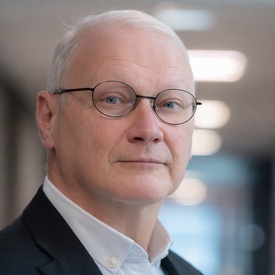
Frank LAFONT
Director of the CIIL |
|
|
|
|
|
|
|
|
|
PROFILE
|
|
|
|
|
|
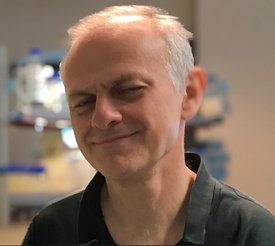
Yves ROUILLÉ
Research director - CNR
|
I carry out my research at the CIIL’s Molecular and Cellular Virology Laboratory (MCV), headed by Sandrine Belouzard. My research focuses on the cell biology of cells infected by positive-sense RNA viruses. My research projects focus on the molecular and cellular mechanisms associated with viral replication. I am also working on the discovery of antiviral compounds by developing screening tools.
More about Yves
|
|
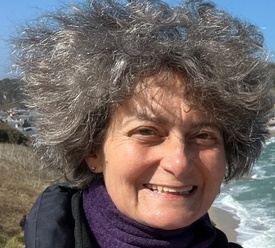
Elizabeth PRADEL
Resercher - INSERM
|
I am a bacteriologist. I arrived in Lille as a postdoctoral researcher in 1993 to work on Bordetella pertussis in the laboratory of C. Locht. In 1995, I was appointed as an Inserm Research Scientist (Chargé de Recherche).
Over the course of my career, through positions in both Marseille and Lille, I have studied a variety of bacterial pathogens, including Enterobacter aerogenes (efflux pumps), Serratia marcescens (virulence using the C. elegans model), Yersinia pseudotuberculosis and Yersinia pestis (virulence, first in the laboratory of M. Simonet and later in that of F. Sebbane), and adherent-invasive Escherichia coli (virulence using the C. elegans model).
After returning to the CIIL in early 2020, I joined the laboratory of R. Hartkoorn, where I contribute to the development of new antibiotics targeting Enterobacterales and Mycobacterium abscessus.
|
|
|
|
|
|
|
|
|
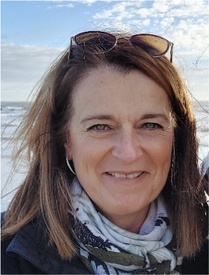
Nathalie DEBOOSERE
Engineer - Institut Pasteur de Lille (IPL)
|
I have been working as a Research Engineer in Biology at the Institut Pasteur de Lille since November 2000, and I have not seen the time go by! This is largely thanks to the colleagues in the three research teams I have worked with over the years. They have helped me grow scientifically and technically, while also enriching me on a personal level through their trust, support, and daily camaraderie.
I have specialized in the study of infection at the cellular level in both virology and bacteriology. At the same time, I enjoy diversity and change. Looking back on my career, I would say that I have been fortunate to benefit from many rewarding professional opportunities. However, these opportunities were not only a matter of luck—I actively sought them out, created them, and chose the paths that best matched my aspirations.
More about Nathalie
|
|
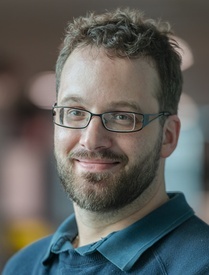
François PIERRE
Research enginner - University of Lille
|
I am a Research Engineer at the University of Lille, working within the Plague and Yersinia pestis (PYP) research team led by Dr. Florent Sebbane.
My scientific journey began in the Paris region at Pierre and Marie Curie University (Paris 6 – Jussieu), where I earned a Bachelor's degree in Life and Earth Sciences in 2007. It was during this time that I developed a strong interest in microbiology and discovered a particular passion for both virology and bacteriology.
I continued my training at the same institution, obtaining a Master's degree in Molecular and Cellular Biology in 2009, with a specialization in Microbiology and a focus on Medical Bacteriology. This academic background provided me with a solid foundation in microbial pathogenesis and host–pathogen interactions, paving the way for my subsequent career in infectious disease research.
More about François
|
|
|
|
|
|
|
|
|
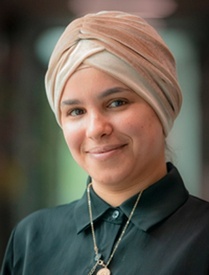
Cyrine BENTALEB
Post-doc researcher
|
Since childhood, I have been driven by a passion for scientific research, fueled by a deep curiosity about living organisms. After completing a Bachelor's degree in Experimental and Analytical Biology and a Master's degree in Microbiology and Molecular Epidemiology, I pursued my PhD at the CIIL, where I characterized hepatitis E virus (HEV) replication factories and investigated the ORF1 replicase. This work was recognized with the 2023 First Prize for the Best Thesis on Viral Hepatitis.
Since March 2023, I have been conducting postdoctoral research focused on understudied HIV-1 reservoirs, particularly infected megakaryocytes and platelets, with the aim of identifying novel therapeutic targets. My current research also explores HIV–hepatitis co-infections to better understand the mechanisms underlying viral persistence and to develop innovative therapeutic strategies.
More about Cyrine
|
|
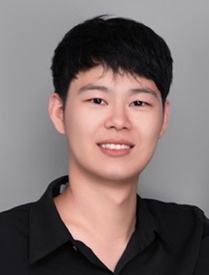
I am a third-year PhD candidate working under the supervision of Dr. Vangelis Agouridas within the Chemical Biology of Flatworms (CBF) team led by Dr. Oleg Melnyk.
Originally from China, I obtained my Master's degree from the University of Shanghai. Prior to joining the CBF team, I conducted research across several areas of chemistry, including the synthesis and applications of metal–organic frameworks (MOFs), the organic synthesis of small molecules with antitumor properties, and the development of insulin analogues with enhanced thermal and serum stability.
These formative research experiences sparked my interest in protein chemistry and chemical biology and ultimately inspired me to pursue a career in this field. My current doctoral research allows me to further develop this passion while contributing to innovative approaches at the interface of chemistry and biology.
More about Chen
|
|
|
|
|
|
|
|
|

I am a third-year PhD candidate under the supervision of Jean-Claude Sirard and Anne Rogel in the Bacteria, Antibiotics and Immunity research team.
My doctoral research is part of the European consortium NOSEVAC and focuses on Streptococcus pneumoniae, a bacterium that colonizes the respiratory tract and can cause invasive diseases in vulnerable individuals. The aim of my project is to identify novel factors involved in bacterial colonization and virulence that are conserved across different pneumococcal serotypes.
These conserved factors represent promising antigen candidates for the development of nasal vaccines designed to elicit a protective local immune response. Through this work, I contribute to the development of innovative vaccination strategies aimed at preventing pneumococcal infections and reducing their burden in at-risk populations.
More about Lisa
|
|
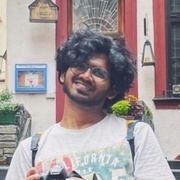
Venkat MUDIYAM
PhD student
|
My journey into research began during the final year of my Bachelor's degree in Biotechnology, when I realized that my training, while strongly application-oriented, had provided limited grounding in the fundamental principles of biology. Motivated to strengthen this foundation, I worked as a research associate on the human malaria parasite, an experience that sparked my interest in apicomplexan parasites.
I subsequently pursued a Master's degree in Cellular and Molecular Biology at the University of Bonn, where I further developed this interest and confirmed my desire to pursue a career in research. During this time, I applied to join Mathieu Gissot’s research group at the CIIL and was awarded an Institut Pasteur de Lille (IPL) fellowship to undertake my PhD studies.
More about Venkat
|
|

Thierry RAZAFINDRATSITA
Finance and Administration Manager
|
I am a financial and administrative manager at the CIIL. Within my portfolio of research teams, I carry out the mandatory financial management tasks related to expenditure and ensure that all expenses comply with applicable regulations.
In a multi-institutional environment that can sometimes be complex, I strive to make procedures and information as clear and straightforward as possible in order to facilitate their implementation.
I hold a degree as a technician in accounting and payroll management. I worked for 15 years in the Île-de-France region, both in the private sector (accounting and payroll firms and other financial services) and in the public sector as a financial administrator. In this context, I successfully passed the ITRF competitive examination in 2020.
I moved to Lille in 2024 with my partner and our two daughters, and I am thoroughly enjoying discovering the region. In my free time, I practice swimming and table tennis.
|
|
|
|
|
|
|
|
|
LIFE AT CIIL
|
|
|
|
|
|
|
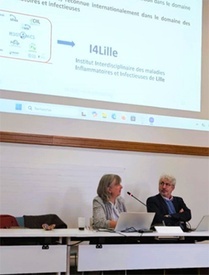
Construction begins on I4Lille, the Lille Interdisciplinary Institute for Inflammatory and Infectious Diseases!
|
Nathalie Mielcarek Deputy Director of the CIIL and David Launay, Deputy Director of INFINITE, organized the inaugural meeting for the development of I4Lille on November 25, 2025, at the headquarters of the University of Lille.
More than 60 participants, representing 17 research teams, have already joined this initiative to collectively build this ambitious and strongly interdisciplinary project.
Structured around three interconnected pillars—Research/Innovation, Care/Prevention, and Training/Dissemination—I4Lille aims to become an internationally recognized institute in inflammatory and infectious diseases.
More detail about the program
|
|
The PGI4 Graduate Program brings together several Master’s tracks focused on inflammatory and infectious diseases, in connection with the I4Lille initiative.
Based on a One Health approach, the program integrates biology, environmental sciences, economics, and law to analyze the interactions between human, animal, and environmental health. One Health
A shared interdisciplinary course unit promotes dialogue across disciplines, with the aim of addressing today’s major health, climate, and societal challenges.
More detail on the PGI4 program
|
|
|
|
|
|
|
|
|
|
Core facilities of the unit
|
Biofabrication & Mechanobiology Platform (BFM)
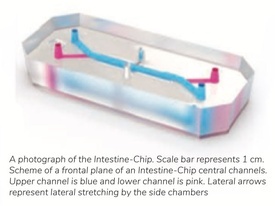
The Biofabrication and Mechanobiology (BFM) platform is an internal, shared technological facility of the CIIL, dedicated to microfabrication, prototyping, and (bio)mechanical analysis for fundamental and translational biomedical research.
It is accessible to CIIL research teams as well as to academic and industrial partners within the framework of structured collaborations.
The platform covers the entire device development pipeline, from design to custom fabrication and analysis, relying on a range of complementary technologies in microfabrication, rapid prototyping, and advanced microscopy, including super-resolution photonic microscopy and atomic force microscopy (AFM).
It provides tailored solutions for a broad spectrum of applications, with a particular expertise in the development of systems for advanced cell culture—such as organ-on-a-chip models—as well as for applications in chemistry and bio–material interfaces.
Thanks to recognized expertise in mechanobiology, imaging, and biological system engineering, the platform supports projects from feasibility studies and proof-of-concept stages through to the development of robust, reproducible devices compatible with valorization and technology transfer pathways. It thus contributes to strengthening interdisciplinary research approaches and enhancing the visibility of scientific collaborations within CIIL.
More about the facilities
|
|
Biostatistics Platform
The Biostatistics platform of the CIIL supports the Centre’s research teams throughout all stages of their projects, from study design to the dissemination and valorization of results.
In the early phases, it contributes to the definition of experimental design and sample size (power) calculations. It then develops the statistical analysis plan and carries out the analyses. Finally, it supports the interpretation of results and their communication.
The platform provides a broad range of statistical expertise tailored to the biological and medical questions addressed within CIIL. It also has a training mission, contributing to capacity building in biostatistics among researchers and students.
These activities play a key role in ensuring the scientific quality and robustness of the research conducted at the Centre.
Contact : Cécile Lecoeur (cecile.lecoeur@cnrs.fr)
More detail about the Biostatistic platform
|
|
|
|
|
|
|
|
|
IN BRIEF
|
|
|
|
|
|

|
Renewal of the Centre’s Internal Advisory Body
|
Elections for the CIIL Unit Council
The elections for the Unit Council of the CIIL concern the renewal of the internal consultative body representing all categories of staff within the laboratory.
The Unit Council is chaired by the Head of the Unit and contributes to decisions regarding scientific directions, as well as the overall organisation and functioning of the unit.
The vote will be conducted electronically, using a two-round multi-member voting system.
All permanent staff assigned to the unit are eligible to stand for election, as well as non-permanent staff who participate in CIIL activities and have at least one year of seniority in the unit on the date of the election.
Submission of candidatures for the first round will be open from February 9, 2026 at 10:00 a.m. to February 13, 2026 at 5:00 p.m. (and, if necessary, for the second round from March 11 to March 12, 2026 at 5:00 p.m.).
The election will take place on March 10, 2026, with a second round scheduled for March 24, 2026 in case any seats remain unfilled.
Every candidacy and every vote counts: eligible staff members are encouraged to stand for election and to take part in the vote, in order to collectively contribute to the life and strategic directions of the CIIL.
|
|
|
Highlights from the IPL PhD Students’ Day
|
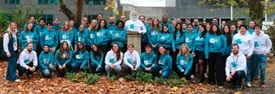
On Thursday, November 13, 2025, the Institut Pasteur de Lille came alive with science, good vibes, and PhD students during the PhD STUDENT’S DAY!
Inspiring presentations, interactive activities, enthusiastic discussions, and smiles everywhere—this first edition was a true concentrate of science… and fun.
As a reminder, this event was initiated in 2024 at the scale of the CIIL, following a proposal put forward by Inès Leleu and Valentin Sencio during a CIIL laboratory council meeting. The project received strong support from the entire council as well as from the then CIIL director, Jean Dubuisson, to whom we extend our warmest thanks for his support and trust.
A huge congratulations to all PhD students for their energy and the quality of their research work, and many thanks to the organizing teams, speakers, and everyone who contributed to making this event possible.
And now, A CALL FOR VOLUNTEERS: if you would like to take part in organizing the SECOND EDITION at the Institut Pasteur de Lille, scheduled for late 2026, please get in touch!
Science is meant to be shared—and the PhD Day is living proof of it!
|
|
|
|
|
|
|
|
|
|
Digital Workshop: Awareness Session
|
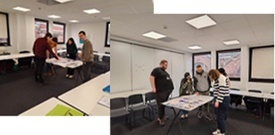
First-year PhD students took part in a workshop led by Frank Lafont (Head of the team at the CIIL) on the “Digital Collage” (Fresque du numérique).
This session aimed to raise awareness of the challenges, impacts, and potential solutions related to the use of digital tools, both in a professional context and in everyday life.
|
|
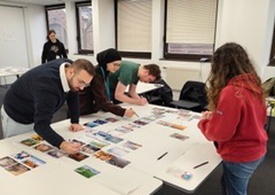
On January 26, 2026, first- and second-year PhD students from the CIIL took part in a Climate Fresk workshop led by Frank Lafont (Director of the CIIL).
This session enabled participants to engage with environmental issues linked to human activities in research and to reflect on the broader ecological impact of scientific practices.
|
|
|
|
|
|
|
|
|
|
Contributors to this issue:
|
- Yves ROUILLE
- Nathalie DEBOOSERE
- Cyrine BENTALEB
- Chen WAN
- Cécile LEŒUR
- Nathalie MIELCAREK
- Elizabeth PRADEL
- Fraçois PIERRE
- Lisa SACHET
- Thierry RAZAFINDRATSITA
- Sabrina MARION
|
|
|
|
|
|
|
|
|
Editorial Direction and Oversight :
Editorial Coordination :
Proofreading :
Design:
|
|
|
|
|
|
 LinkedIn
 Bluesky