|
|
|
|
|
In this latest issue of the Lille Centre for Infection and Immunity (CIIL) Newsletter, you will find profiles of research staff: Rodrigue Dessein (Clinician-Researcher), Carine Rouanet (research fellow), Michael Marceau (senior lecturer), Daphnée Soulard (Engineer), Shahriar Safari (Postdoctoral Researcher), Magalie Sénéchal (Assistant Engineer), and Guillaume Camus, Anais Dardaillon and Léa Mézière (PhD students), as well as Karine Serrure (Assistant Engineer). Please feel free to find out more about their activities by clicking on the link provided! We also offer an overview of the recent funding secured by CIIL members from the French National Research Agency (ANR) through its various programmes; the 2026 cohort is particularly excellent, with six projects being coordinated. We look back at the international conference of the STAPA network, dedicated to host-pathogen interactions, which took place in Paris and saw Emma Louvet and Dima Abdallah selected to present their work. We’ll be sharing a glimpse into life at the CIIL, including our involvement in ‘Science en fête’, as well as news from the Sustainable Development and Quality of Life and Working Conditions committees – notably featuring an event dedicated to work-life balance and stress management. We’ll round off with a few brief updates and hope you enjoy reading this issue. |
|
|
|
|
|
|
|
|
|
The France Vaccins - France 2030 program has issued a statement regarding the NOSE program and the NAVIx project, in which CIIL teams are heavily involved. This will enable our Center to position itself at the forefront of intranasal vaccine development. We will devote significant coverage to this topic in our next newsletter.
|
|
|
|
|
|
|
|
|
PROFILE
|
|
|
|
|
|
|
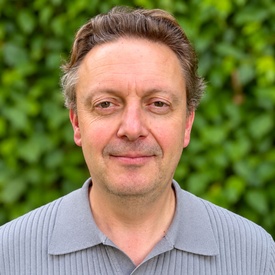
Rodrigue DESSEIN - Clinician scientist - CHRU Lille
|
Why should a disturbance in the gut leave the lungs more vulnerable to infection? That question is at the core of my research. Critical illness, antibiotics and intestinal carriage of multidrug-resistant bacteria can all disrupt the gut microbiota. Rodrigue’s aim is to understand how this affects pulmonary defenses, and whether restoring the microbiota's functions could one day help prevent infections in intensive care.
Get to know Rodrigue
|
|
|
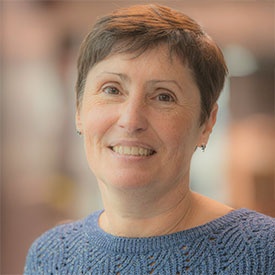
Carine ROUANET - Researcher - IPL
|
|
|
|
|
|
|
|
|
|
|
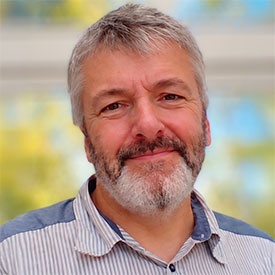
Michael MARCEAU - Associate Professor - Univ. Lille
|
As an Associate Professor at the University of Lille, Michael Marceau joined the Institut Pasteur de Lille (IBL) in 1998 after a doctorate in microbiology at the university Paris 6. His research focuses on the evolution of pathogenic Yersinia, notably Yersinia pestis, the plague bacillus. To link their genomes to their biological properties, he developed software to compare hundreds of bacterial genomes simultaneously, now used to study species evolution and reconstruct ancient plague genomes. He also teaches microbiology at the University of Lille, from undergraduate courses to hospital resident training.
-> Get to know Michael
|
|
|
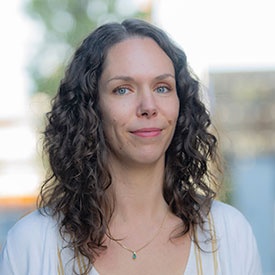
Daphnée SOULARD - Research Engineer - IPL
|
A research engineer at the Institut Pasteur of Lille, working in the “Bacteria, Antibiotics, and Immunity” (BAI) team led by Jean-Claude Sirard. She produces and purifies antigenic proteins used in new intranasal vaccine formulations against Streptococcus pneumoniae, a bacterium that colonizes the respiratory tract and is the leading bacterial cause of community-acquired pneumonia, particularly following an influenza infection. To this end, she works primarily on murine infection models. She is also responsible for the smooth organization and management of the laboratory, as well as supervising students.
-> Get to know Daphnée
|
|
|
|
|
|
|
|
|
|
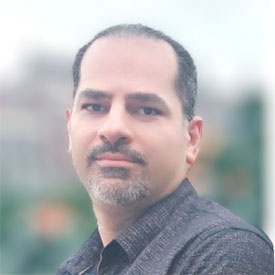
Shahriar SAFARI - Postdoctoral Researcher
|
Shahriar Safari is a Postdoctoral Researcher in the AntiBac team led by Ruben Hartkoorn. Since joining CIIL in January 2024, he has focused on developing and evaluating siderophore-mediated antibiotic delivery against WHO priority Gram-negative pathogens, particularly carbapenem-resistant Pseudomonas aeruginosa. Considering resistance mechanisms in clinical multidrug-resistant (MDR) isolates and the properties of siderophore vectors, he explores vectorization of carbapenem and metallo-β-lactamase inhibitor payloads, assessing the efficacy of the resulting conjugates both in vitro and in vivo. By harnessing siderophore-mediated delivery, his research aims to overcome resistance to last-resort antibiotics.
-> Get to know Shahriar
|
|
|
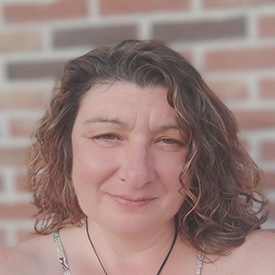
Magalie SENECHAL - Assistant Engineer - CNRS
|
The story of Magalie with the CNRS began during her vocational training (DUT) in Biological Engineering at the Structural and Functional Glycobiology Unit. In 2003, she joined the CNRS as a technician at the Institute of Integrative Biology. She continued her career at the IBL, where she gained expertise in crystallography, immunology, virology, biochemistry, and animal experimentation. After obtaining my Master’s degree in Genomics and Proteomics in 2012, she had the opportunity to join Oleg Melnyk’s Mini-Proteins and Therapeutics team. She analyze synthetic or recombinant proteins using circular dichroism to determine their secondary structure and actively participate in the team's collective activities.
|
|
|
|
|
|
|
|
|
|
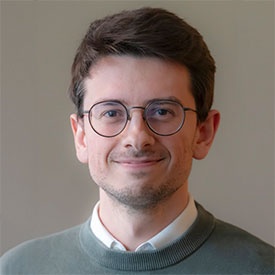
Guillaume CAMUS - PhD student
|
Guillaume Camus is a pharmacy resident and PhD student working under the supervision of Nathalie Mielcarek and Carine Rouanet in the RMB team (Research on Mycobacteria and Bordetella).
His research focuses on two main areas: (1) investigating the intracellular fate of Bordetella pertussis, the bacterium responsible for whooping cough, in alveolar macrophages, and exploring how its virulence factors influence autophagic flux; and (2) developing and optimizing murine and human cell models to better replicate the characteristics of alveolar macrophages.
-> Get to know Guillaume
|
|
|
Anaïs DARDAILLON - PhD student
|
Anaïs Dardaillon is a third-year PhD student on a CIFRE programme, working at the interface between public and private research, with positions at both the EFS and within Dr Fernando Real’s team, "Chronic Viral Infections". Her PhD project, at the intersection of haematology, HIV and nanotechnologies, enables her to explore a particularly stimulating multidisciplinary approach. Passionate about HIV research, she is particularly interested in innovative strategies aimed at eliminating viral reservoirs and, ultimately, contributing to the eradication of the virus.
-> Get to know Anaïs
|
|
|
|
|
|
|
|
|
|
Léa MEZIERE - PhD student
|
Lea's academic journey began with a DUT in Biological Engineering and Health, followed by a vocational bachelor’s degree in Molecular Genetics and Cell Culture, and then a Master’s degree in Cellular and Molecular Biology of the Microenvironment. She undertook several placements at the Institut Cochin, focusing on the study of cellular and virological factors that modulate the intercellular spread of HIV-1 in macrophages. She then joined the CIIL to undertake her PhD on the replication mechanisms of the hepatitis E virus, focusing in particular on the role of the tetraspanin CD81 and characterising the viral ORF1 replicase, under the supervision of Dr Laurence Cocquerel in the team headed by Sandrine Belouzard (Cellular and molecular Virology).
|
|
|
Karine SERRURE - Assistant Engineer - INSERM
|
Having joined the CIIL in 2014 as a finance manager, Karine has had the opportunity to discover the full diversity of life in a laboratory: orders, projects, budgets, funding, regulatory bodies… and, of course, those infamous supporting documents that never fail to remind us of their existence!
Over the years, her responsibilities have evolved and, since 2023, she has had the pleasure of coordinating the management team. Her aim remains the same: to support the teams, make their day-to-day work easier and find solutions to ensure projects can move forward under the best possible conditions.
And since she apparently didn’t have enough spreadsheets, budgets and numbers to deal with during the day, she is also treasurer of the YPL association, based on the Pasteur campus. It’s another role that allows her to continue the collective adventure, with yet more accounts to keep track of… but fortunately, that’s not all!
After all these years at the CIIL, what Karine particularly enjoy is the diversity of her responsabilities, the interactions with colleagues and, above all, the strong sense of teamwork. Behind every procedure and every number, there are always projects to support and people to help.
In the end, her daily work could be summed up quite simply: organizing, planning ahead, finding solutions… and keeping a smile on my face whenever another “small urgent matter” comes along!
|
|
|
|
|
|
|
|
|
HIGHLIGHTS
|
|
|
|
|
|
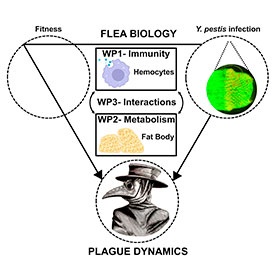
Immune-Metabolic Networks in Fleas Shaping Pathogen Transmission (FLEA-NET)
|
|
OligoM project
Project Title: Characterization of the Spatiotemporal Dynamics of Coronavirus M Protein Oligomerization (OligoM)
Managing Institution: Inserm
Budget: €480,000
Project coordinator:
- Sandrine Belouzard - MCV team, CIIL
Partners:
- Xavier Hanoulle – Integrative Structural Biology, CNRS UMR 9031, University of Lille, Institut Pasteur de Lille
- Frank Lafont – MOHMI Team, CIIL
- Emmanuelle Blanchard – Morphogenesis and Antigenicity of HIV, Hepatitis Viruses and Emerging Viruses, Inserm U1259, University of Tours
Project Summary:
Coronaviruses contain a positive-sense single-stranded RNA genome associated with the nucleocapsid protein, forming a ribonucleoprotein complex. This complex is surrounded by a host-derived lipid bilayer in which three envelope proteins are embedded. Among these, the membrane (M) protein plays a central role in viral morphogenesis.
Although this complex process remains poorly understood, the M protein has recently emerged as a promising antiviral target. Two inhibitors targeting the SARS-CoV-2 M protein have been reported (Laporte et al., Nature, 2025; Van Damme et al., Nature, 2025). However, these inhibitors show little or no activity against alphacoronaviruses and more divergent betacoronaviruses, such as MERS-CoV.
For one of these inhibitors, studies investigating its mechanism of action have shown that it blocks M protein oligomerization, a process essential for the formation of new viral particles. However, the mechanisms underlying M protein oligomerization remain largely unknown. Given the complex intracellular trafficking of the M protein, a key question remains unanswered: how and where do M protein oligomers form?
The OligoM project aims to investigate the molecular mechanisms underlying M protein oligomerization and characterize its spatiotemporal dynamics within cells.
These findings will not only improve our understanding of viral morphogenesis but also provide valuable insights into the mechanisms of action of this newly identified class of inhibitors. Ultimately, the knowledge gained through this project will be essential for developing broad-spectrum M protein inhibitors targeting multiple coronaviruses.
|
|
|
|
|
|
|
|
|
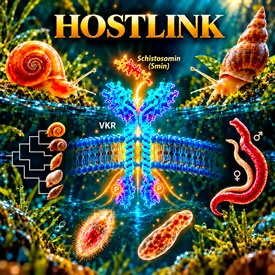
HOSTLINK project (Host-parasite molecular links):
Schistosomin-VKR cross-communication in mollusk-schistosome development
Project coordinator:
- Jérôme Vicogne - Miniproteins & Therapeutics (MinT) team, CIIL
Partners:
- MinT/CIIL (Lille), RED/UGSF (Lille)
- BaT/I2BC (Gif-sur-Yvette)
- 2MAP/IHPE (Perpignan)
Funding Source: PRC, CE20
Managed by IPL.
Funding: 627 k€ - 48 months
Abstract:
HOSTLINK aims to understand how schistosomins—a family of small, disulfide-bridge-rich peptides produced by mollusks—regulate Venus Kinase Receptors (VKRs), a class of tyrosine kinase receptors
found in both mollusks and schistosomes. Our recent results show that a single schistosomine can inhibit the VKR of the host mollusk while activating those of the parasite, suggesting a novel mechanism of
host-parasite molecular communication. The project combines chemical synthesis of miniproteins, structural biology, functional analyses, and Biomphalaria-Schistosoma infection models to determine how
this Smin-VKR axis controls parasite development, host-parasite compatibility, and, ultimately, the transmission of schistosomiasis.
|
|
DEEP-MAMBA project
Title : Discovery, Evaluation and Optimization of Deep-Sea Peptides as Countermeasures Against Multidrug-Resistant Bacteria
Budget : €394,923.25
Duration : 36 months
Partners :
The DEEP-MAMBA consortium brings together partners with complementary expertise, ranging from antimicrobial peptide research and clinical microbiology to defence-related challenges.
- Aurélie Tasiemski, Project Coordinator : University of Lille – CIIL UMR 9017 / MINT Team
- Fabienne Ripoll-Neulat : IRBA (French Armed Forces Biomedical Research Institute)
- Katy Jeannot : French National Reference Centre for Antibiotic Resistance, Besançon
- Marc Maresca : Aix-Marseille University (AMU)
Project Summary :
DEEP-MAMBA aims to develop new antibiotics targeting *Acinetobacter baumannii* and *Burkholderia pseudomallei*, two multidrug-resistant bacteria responsible for severe infections and of major concern to both civilian and defence sectors.The project focuses on two antimicrobial peptides derived from extremophilic marine worms: alvinellacin and paralvinellacin. Through their optimization, rational engineering, and evaluation in lung and wound infection models, the project aims to identify effective and stable drug candidates.
The ultimate goal is to develop new medical countermeasures against antimicrobial resistance and biological threats, while strengthening France’s strategic autonomy.
|
|
|
|
|
|
|
|
|
SENINFLU project :
Senescent Macrophages inLong-Term Pulmonary Sequelae Following Viral Pneumonia
Project Coordinator: François Trottein
Partner: Ruxandra Gref (Université Paris-Saclay)
Project Summary:
Influenza has a considerable medical and socioeconomic impact. In addition to causing deaths and severe disability, it can lead to long-term complications. The mechanisms underlying these persistent complications remain poorly understood, and effective treatments are still lacking.
Cellular senescence, triggered by various stressors, including virus-induced DNA damage, plays a role during the acute phase of infection. However, its contribution to long-term complications remains less well understood.
Based on recent findings from preclinical models, we hypothesize that the accumulation of senescent macrophages during the recovery phase contributes to the onset and progression of long-term pulmonary sequelae.
Our research programme focuses on three complementary objectives: (1) identifying different populations of senescent macrophages; (2) determining their origins and functions; and (3) developing innovative therapeutic approaches to selectively eliminate these cells.
Understanding whether cellular senescence contributes to long-term lung damage following viral pneumonia is of major scientific and biomedical importance.
Given the involvement of senescent macrophages in cancer, fibrosis, atherosclerosis, and obesity, this project could have clinical implications not only for viral respiratory infections but also for other chronic diseases associated with cellular senescence.
|
|
TRIMEGA project:
Trained Immunity-Reprogrammed Megakaryocytes in Post-Acute Infection Syndromes
Project Coordinator: Fernando Real – Centre for Infection and Immunity of Lille (CIIL), Lille
Partner: Emma LeFrançais – Institute of Pharmacology and Structural Biology (IPBS), Toulouse
Managing Institution: Inserm Nord-Ouest
Budget: €775,853
Project Summary:
Post-acute infection syndromes (PAIS), including long COVID and chronic complications following influenza, also known as “Long Flu”, are characterized by debilitating symptoms that persist after the initial infection and affect more than 65 million people worldwide. These conditions commonly involve persistent fatigue, cognitive impairment, and multi-organ dysfunction, yet their underlying mechanisms remain poorly understood.
The TRIMEGA project aims to investigate these mechanisms by focusing on megakaryocytes (MKs), polyploid bone marrow cells that are essential for platelet production but also play a role in responses to infection and inflammation.
We hypothesize that, in PAIS, viral infection induces epigenetic reprogramming of megakaryocyte progenitors, leading to the generation of inflammatory megakaryocytes that may migrate to and persist in extramedullary tissues, where they could contribute to increased inflammation and fibrosis.
TRIMEGA will combine in vitro and in vivo murine models with human clinical samples to investigate and validate novel therapeutic strategies targeting the megakaryocyte compartment for the treatment of post-acute infection syndromes.
|
|
|
|
|
|
|
|
|
|
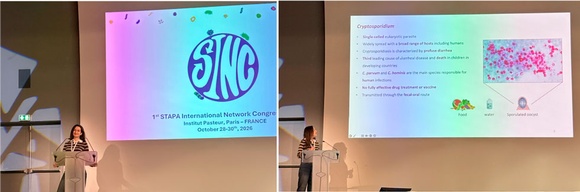
First STAPA International Network Congress 2026
|
Congratulations to Emma and Dima, two PhD students at the Centre for Infection and Immunity of Lille (CIIL), who were selected to give oral presentations at the first edition of the STAPA International Network Congress (SINC)!
Emma Louvet, supervised by Muriel Lavie, and Dima Abdallah, supervised by Gabriela Certad, had the opportunity to share their research with the international scientific community of the Pasteur Network.
Organized by and for early-career researchers, this inaugural international STAPA congress brought together scientists from across the network for lectures, oral presentations, and roundtable discussions, united by a shared ambition: to give a voice to the next generation of scientists and highlight their essential role in advancing research.
The selection of both PhD students is a wonderful recognition of the quality of the research conducted at CIIL and reflects the dynamism and excellence of our emerging scientific talent!
A huge congratulations to Emma and Dima, as well as their supervisors, for showcasing Lille's research excellence on the international stage!
|
|
|
|
|
|
|
|
|
LIFE AT CIIL
|
|
|
|
|
|
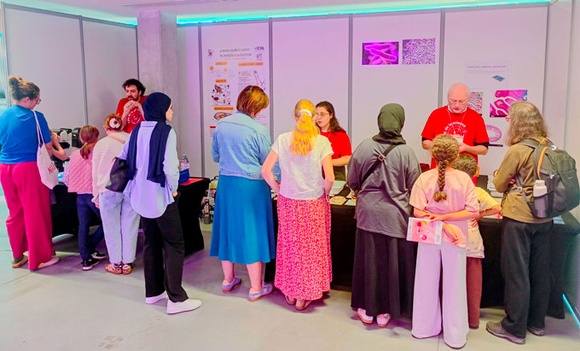
CIIL Scientists Bring Science to Life at the 2026 Science Festival!
Once again this year, scientists from the CIIL were delighted to share their passion for science with schoolchildren and the general public during the 2026 Science Festival, held from 1 to 4 October at the "1894" event space on the Institut Pasteur de Lille campus. This year's theme was "The Science of Flavours" (Saveurs savantes).
Using stereomicroscopes, food samples and 3D-printed models of microorganisms, the scientists engaged with pupils from primary and secondary schools, as well as nearly 800 visitors who attended over the weekend.
Visitors experienced a few thrills as they explored the different stages of flea development in remarkable detail under the microscope. They were also challenged to distinguish fleas that had taken a blood meal from those that had not.
Microorganisms were another highlight of the event, from those found in our food to those living in our gut. This provided a great opportunity to explain that the term "microbe" encompasses a vast diversity of organisms, some of which are beneficial, while others can cause anything from mild discomfort to more serious health problems.
Over these four days, CIIL scientists stepped outside their laboratories to make science fun, interactive and accessible to all. They are already looking forward to doing it all again next year!
|
|
|
|
|
|
|
|
|

Sustainable Development – Help Us Assess Our Carbon Footprint!
The CIIL Sustainable Development Group is conducting a new greenhouse gas emissions assessment for our research unit.
Building on the previous assessment carried out in 2022, this updated analysis will help identify practical strategies and concrete actions to reduce our environmental impact.
To ensure accurate results, we need your input!
- Who? All CIIL members, including permanent and non-permanent staff. Newcomers can answer based on their current habits.
- What? Two short questionnaires: one about your daily commute and another about your eating habits.
- How long? Just 3 minutes on the Labos 1.5 platform, by clicking -> here or scanning the QR code above
- Why participate? Compare your environmental impact with average levels and the targets set by the Paris Agreement.
Thank you for your participation and for helping make CIIL more sustainable!
|
|
|
|
|
|
|
|
|

|
Well-being at Work Starts with Taking Care of Yourself!
|
Taking Care of Yourself to Work Better!
A morning dedicated to Quality of Life and Working Conditions (QLWC)
The Quality of Life and Working Conditions (QLWC) working group recently organised a morning event focused on a shared goal: gaining a better understanding of the factors that contribute to our health and well-being, both at work and in our personal lives.
The event provided an opportunity to share practical advice, discuss everyday habits and explore simple ways to take better care of ourselves. Stress management, sleep, nutrition, physical activity and workplace ergonomics were all on the agenda, with participants providing very positive feedback.
Everyday Health and Well-being: Practical Tips for Taking Care of Yourself
The morning began with a session led by Julie Penin, dietitian, and Aurélien Souppez, health and exercise specialist, from the Centre for Health Education and Prevention at the Institut Pasteur de Lille.
Their presentation, entitled "Maintaining a Healthy Balance in Everyday Life", explored several key aspects of maintaining good health and well-being:
- Managing stress: identifying practical strategies to cope with everyday challenges.
- Staying active: incorporating more movement into daily routines, with practical exercises that participants were invited to try.
- Eating well: adopting a balanced diet to support health and well-being.
- Getting enough sleep: recognising the importance of sleep for recovery and overall health.
The speakers also introduced the Cap Santé app, which provides useful resources to support individuals in taking a proactive approach to their health.
Want to learn more? Scan the QR code above to discover the Cap Santé app.
Breaking Up Sedentary Time and Improving Workplace Comfort
After a friendly break, Christophe Leviel, an occupational therapist at the University of Lille, continued the morning with a presentation focusing on two important aspects of working life: sedentary behaviour and screen-based work.
Through a range of practical recommendations, he demonstrated how small changes in everyday habits can make a real difference to workplace comfort. These included taking regular breaks from prolonged sitting, incorporating more movement throughout the day and adjusting workstation setups to improve ergonomics.
These recommendations are particularly important for helping prevent musculoskeletal disorders (MSDs), which can be associated with poor posture and repetitive movements.
This highly practical session gave participants simple tips they could easily apply in their own working environments.
Small Changes for Lasting Well-being
The event highlighted how improving quality of life at work can begin with simple, everyday actions: moving more, prioritising sleep, maintaining healthy eating habits, managing stress and creating a comfortable, ergonomic workspace.
A warm thank you to Julie Penin, Aurélien Souppez and Christophe Leviel for their valuable presentations, practical advice and time, as well as to everyone who attended and contributed to the discussions.
Taking care of yourself is also a way to work better!
|
|
|
|
|
|
|
|
|
IN BRIEF
|
|
|
|
|
|
|
CIIL Research Group Leaders’ Retreat – 24 November 2026
|
CIIL research group leaders will come together on Tuesday, 24 November 2026, for a strategic retreat hosted by Sciences Po Lille, which has kindly offered to welcome us to its premises.
The day will focus on the Centre's key scientific priorities, its future development, and strategies to enhance its attractiveness, visibility and scientific impact.
|
|
|
CIIL Scientific Day – 26 November 2026
|
The next CIIL Scientific Day will take place on Thursday, 26 November 2026, from 9:00 a.m. to 5:00 p.m., at Pavillon 1894.
This event will bring together members of the Centre to share the latest research findings and scientific advances from the different teams, while encouraging discussions and exchanges among researchers.
We will also be delighted to welcome François Rousset (CIRI, Lyon) as our invited speaker, who will present his research on antibacterial immunity.
|
|
|
|
|
|
|
|
|
|
Friday Seminars: Broadening Our Horizons and Fostering New Collaboration
|
Our Friday morning scientific seminars continue to foster connections beyond the CIIL by regularly welcoming external researchers.
These seminars provide valuable opportunities to explore complementary scientific approaches, share research findings and, above all, encourage scientific discussions and the development of new collaborations.
Among our recent invited speakers, we were delighted to welcome Delphine Muriaux (IRIM), Céline Cougoule (IPBS, Toulouse) and Gaël Guillot (Centrale Lille – Inria).
|
|
|
|
|
|
|
|
|
- Mara BALDRY
- Sirine BENFIALA
- Audrey COULON
- Maxime DEPRINCE
- Louis DORISON
- Sarah HANNA
- Annapoorani JEGATHEESAN
- Zoulika KHERROUCHE
- Charlotte LACOMBE
|
|
- Maëlle LAMISSE
- Floriane LIMOGE
- Elise MAHIEU
- Disha MURKHEJEE
- Lou-Anne PELTIER
- Alexiane ROUSSEAU
- Hugo SIRARD
- Maelysse SOUCHU
- Camille ZOKVIC
|
|
|
|
|
|
|
|
|
ACKOWLEDGEMENTS
|
|
|
|
|
|
- Sandrine Belouzard
- Sebastien BONTEMPS-GALLO
- Guillaume CAMUS
- Anaïs DARDAILLON
- Rodrigue DESSEIN
- Sébastien JANEL
- Cécile LECŒUR
- Arnaud MACHELART
- Michael MARCEAU
- Léa MÉZIÈRE
- Fernando Real
|
|
|
who made this edition possible
|
- Agustin ROLADELLI
- Carine ROUANET
- Shahriar SAFARI
- Magalie SENECHAL
- Karin SERON
- Karine SERRURE
- Daphnée SOULARD
- Aurélie TASIEMSKI
- François TROTTEIN
- Jérôme VICOGNE
|
|
|
|
|
|
|
|
|
- Editorial Direction and Oversight :
Frank LAFONT
Sabine BLIN
Sophana UNG
|
|
|
|
|
|
 LinkedIn
 Bluesky